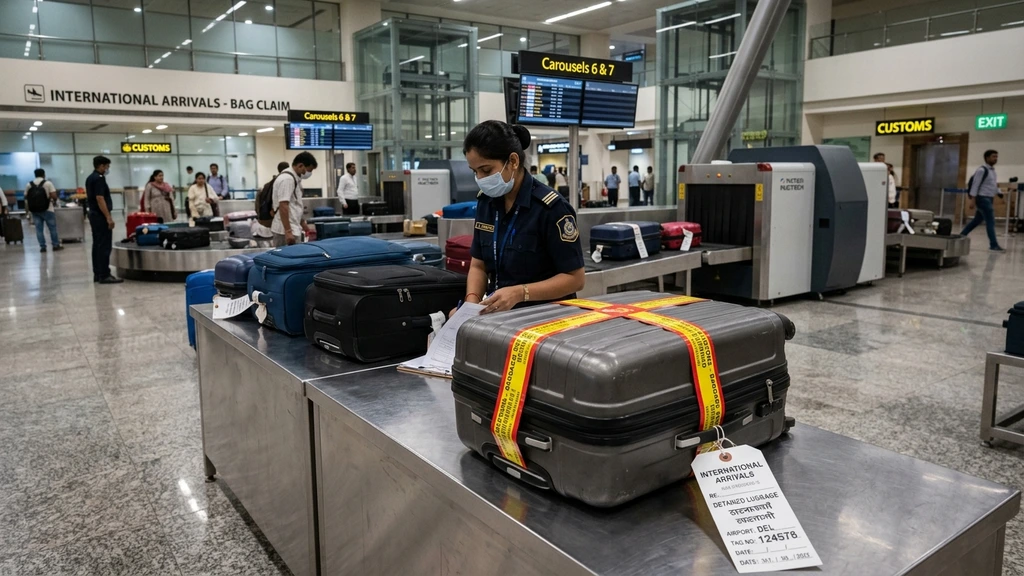
Key Takeaways & At a Glance
- Section 80 of the Customs Act, 1962, provides a non-punitive statutory mechanism allowing international passengers to request temporary detention of their dutiable or restricted baggage for clearance or re-export.
- Always secure a formal, itemized Detention Receipt (DR). The DR acts as conclusive legal title and custody receipt, detailing item description, net weight, serial numbers, and condition of the detained goods.
- Passengers have a statutory right to re-export detained goods upon their return departure from India under Section 80 without paying Indian customs duty, subject only to nominal warehouse storage charges.
- If Customs unlawfully converts a Section 80 detention into a coercive Section 110 seizure without legal justification, the passenger can challenge the action before the Commissioner (Appeals) or High Court.
- Detained goods are stored in customs airport warehouse custody; passengers can authorize a legal representative or relative via a Power of Attorney (PoA) to handle clearance or re-export on their behalf.
Understanding the Legal Issue
Arriving at an international airport only to have personal luggage, electronic equipment, professional instruments, or commercial samples detained by Indian Customs is an intimidating and disruptive experience. International business executives, NRI families, and foreign tourists are often stranded without their essential belongings or facing imminent departure dates while their property remains locked in customs airport custody.
Critically, Indian customs law makes a fundamental statutory distinction between 'Detention' and 'Seizure'. Detention under Section 80 of the Customs Act, 1962, is not a punishment or a charge of criminal smuggling. It is an administrative accommodation enacted by Parliament to protect passengers who cannot immediately pay high customs duties, who lack import permits, or who prefer to re-export their belongings when leaving India. Understanding how Section 80 operates, how to enforce your re-export rights, and how to recover detained property through expedited legal representation ensures your rights are protected.
Key Provisions of the Customs Act, 1962
Customs proceedings in India are governed strictly by codified parliamentary statutes and binding notifications issued by the Central Board of Indirect Taxes and Customs (CBIC). The foundational statutory provisions applicable to this matter include:
Authorizes temporary detention of passenger baggage at the owner's request for clearance on payment of duty or for re-export upon leaving India.
Requires the passenger to declare baggage contents truthfully, providing the legal foundation for issuance of a Detention Receipt under Section 80.
Provides for Revision Application before the Central Government (Joint Secretary) for passenger baggage disputes, bypassing CESTAT.
In-Depth Legal Analysis & Practical Application

1. Section 80 Detention vs. Section 110 Seizure
- Section 80 Detention (Non-Penal): Executed at the request of the passenger or when goods require assessment. No allegation of guilt, fraud, or smuggling is leveled. The passenger retains legal ownership, and goods are stored in customs bonded custody.
- Section 110 Seizure (Penal): Executed coercively when customs officers allege that goods are liable to confiscation under Section 111. Initiates quasi-judicial penalty proceedings and the 6-month Show Cause Notice statutory clock.
2. The Re-Export Absolute Right
Under Section 80, if a passenger does not wish to pay Indian import duty—or if the item requires an import license (e.g., restricted electronic drones, satellite phones, excess commercial samples)—the passenger has a statutory right to request re-export.
- The goods remain in airport warehouse custody.
- When the passenger is departing India, the goods are delivered directly to the departure gate or checked baggage counter upon payment of nominal warehouse retention fees.
- Zero Indian import customs duty is chargeable on re-exported baggage.
3. Clearances through Authorized Representatives (Power of Attorney)
Often, passengers must travel onward to other Indian cities or abroad and cannot remain at the airport terminal for clearance. Indian Customs permits passengers to execute an authorization letter or Power of Attorney (PoA) appointing an advocate or relative to:
- Present original purchase invoices and identity proofs.
- Attend adjudication hearings or appraisal sessions.
- Pay assessed customs duty and warehouse fees.
- Take physical custody of the released baggage.
Step-by-Step Legal Procedure
Navigating customs defense requires strict adherence to statutory sequences. The standard operational procedure followed by experienced customs litigation counsel includes:
Step-by-Step Procedure: From Detention Receipt (DR) to Clearance or Re-Export
Detention Receipt Issuance
Obtain original Section 80 Detention Receipt specifying item descriptions, serial numbers, seal numbers, and reasons for detention.
Valuation & Duty Assessment
File formal reply to any valuation query; submit authentic purchase invoices and international warranty documents.
Duty Payment or Re-Export Option
Exercise option under Section 80 to re-export detained items without paying domestic duty upon departure from India.
Warehouse Handover
Surrender original DR, pay minimal warehouse custody charges, verify intact seals, and receive handover of baggage.
Insist on an Itemized Detention Receipt (DR)
Never leave the customs hall without an official, stamped Detention Receipt detailing exact item serial numbers, brand, weight, and condition.
Determine Course of Action: Duty Clearance vs. Re-Export
Decide whether to pay applicable duty to clear the goods into India, or elect to re-export the property upon leaving India.
File Formal Release / Re-Export Application
Submit a formal written petition before the Assistant/Deputy Commissioner (Baggage) referencing the DR number, enclosing invoices and flight tickets.
Warehouse Appraisal & Duty Assessment
Accompany the customs appraiser to the warehouse for verification, valuation, and calculation of applicable duty and storage fees.
Cargo Delivery on Departure or Domestic Release
For domestic clearance, pay duty challan and retrieve goods. For re-export, coordinate delivery to the airline boarding gate on the departure date.
Essential Documents & Evidence Checklist
To substantiate claims, establish commercial bonafides, and refute departmental allegations, assemble the following documentary evidence:
- Original Detention Receipt (DR) issued by Airport Customs
- Passport and Visa copies showing arrival flight stamps
- Confirmed return flight ticket and boarding pass (for re-export requests)
- Commercial purchase invoices, receipts, and product serial number records
- Specific Power of Attorney / Authorization Letter (if using a representative)
- Customs warehouse storage fee payment receipt
Practical Case Scenario
Scenario: A German technical consultant arrived at Chennai Airport carrying high-precision optical calibration sensors worth €12,000 for a 10-day industrial audit at an automobile plant in Oragadam. Customs detained the equipment because the consultant lacked a temporary import Carnet or DGFT import permit. The consultant's return flight to Frankfurt was in nine days, and he feared losing his equipment permanently.
Legal Resolution: RRC Law Associates filed an urgent petition under Section 80 before the Airport Customs Commissionerate. We demonstrated that the sensors were specialized professional tools not meant for domestic sale, and formally applied for bonded warehouse custody with re-export upon departure. Simultaneously, our team obtained an urgent provisional clearance under Section 110A backed by a bank guarantee, allowing the consultant to use the equipment during his 10-day project. Upon conclusion, the sensors were escorted to the departure terminal and re-exported smoothly, with the bank guarantee discharged within 14 days.
Common Legal Pitfalls to Avoid
Critical Procedural Mistakes
- Leaving the airport without an official, signed Detention Receipt carrying an authentic serial number and official seal.
- Allowing detained goods to languish past 30 days without filing an extension or release letter, risking uncleared cargo auction under Section 48.
- Attempting to clear commercial quantities under passenger baggage rules rather than filing a formal Bill of Entry.
- Paying informal demands rather than insisting on official electronic customs duty payment challans.
Frequently Asked Questions
Authoritative legal guidance regarding common queries under the Customs Act, 1962:
Under Section 48 of the Customs Act, goods not cleared within 30 days can theoretically be initiated for disposal. However, if the passenger files an interim letter on record showing reasonable cause, Customs routinely extends detention up to 90 days or longer.
Yes. The passenger can issue a notarized Power of Attorney or formal letter of authority enclosing passport copies, the original Detention Receipt, and authorizing the representative to complete appraisal and collection.
Airport terminal operators and Customs levy nominal warehouse charges calculated per day based on package weight or volume. These fees must be cleared before the baggage is handed over for domestic delivery or re-export.
Before accepting delivery, compare the physical items strictly against the inventory recorded on the original Detention Receipt. If damage or shortage is detected, insist on a formal 'Damage Panchnama' before taking custody to establish liability.
Conclusion & Strategic Advice
Customs law disputes in India require swift, technically informed, and legally verified advocacy. Because customs authorities operate under stringent statutory limitation deadlines—from the 30-day Show Cause Notice window to the strict 60-day appellate period under Section 128—delay or informal verbal negotiations frequently compromise substantive legal rights.
Engaging specialized customs legal counsel at the earliest stage of search, summons, seizure, or notice issuance ensures that your business preserves documentary evidence, maintains procedural compliance, and enforces all statutory protections guaranteed under Indian law.
Need Strategic Legal Assistance with Customs Matters?
RRC Law Associates represents importers, exporters, manufacturers, and travelers across Thanjavur, Chennai, and all 38 districts of Tamil Nadu before Customs Adjudicating Authorities, Commissioner (Appeals), CESTAT, and the High Court.